Flat roof, foam roof, and metal roof repair across Madera County — leaks traced to their real source, fixed right, and backed by a contractor who tells you the truth about repair versus replacement.
Roof repair in Madera usually begins the same way: a stain spreads across a ceiling tile, a drip lands on a barrel rack or a pallet of product, and somebody gets sent up a ladder to guess where the water is coming from. On flat and low-slope roofs — which is most of Madera's commercial, ag, and industrial stock — the guess is usually wrong, because water travels. It enters at a failed seam or a backed-out fastener, runs along the deck or under the membrane, and shows up inside the building twenty or forty feet from the actual breach. That's why our repair work starts with diagnosis, not caulk: drone imagery of the whole roof, a physical inspection of the details water actually exploits, and core samples where we need to know what's happening inside the assembly. We're Allstate Spray Foam Roofing — family-owned, 20+ years in the Valley, California license #C-2-1052735, BBB Accredited, SPFA member — and our crews reach Madera in about an hour up CA-99 from our Tulare County shop.
The diagnostic sequence matters because it's what separates a repair that holds from a repair that reappears with the next storm. The drone pass maps the whole roof at high resolution — ponding rings, coating chalk patterns, displaced flashings, drain condition, and the subtle discoloration that flags trapped moisture. The walk-through checks by hand what the imagery flags: seam adhesion, flashing terminations, pitch pans, curb corners, the caulk lines everyone before us already smeared. Cores go where the assembly's moisture condition decides the answer — because a wet-insulation roof and a dry one with a bad flashing can look identical from above and cost wildly different amounts to fix correctly. You get the findings in writing with photos, whether or not you hire us for the repair.
The failure points on Valley flat roofs are remarkably consistent. Seams and laps open as the membrane ages and the roof cycles through 100°F+ summer days and cold, damp winters — thermal movement works every joint until one gives. Flashings crack where the roof meets walls, curbs, and equipment stands. Pitch pans dry out around penetrations. Drains clog with ag dust, leaf litter, and coating chalk, then back water up over their flashings. And ponding zones — endemic on Madera's dead-flat buildings — quietly magnify every one of those weaknesses, especially in winter when tule fog holds evaporation near zero and a January pond can stand for a week. On built-up roofs we also see alligatored asphalt and open blisters; on single-ply, punctured membrane from foot traffic and dropped tools around HVAC units. Our repairs match the system: reinforced seam work, rebuilt flashings, new drain assemblies, targeted membrane patching — done to manufacturer detail, not smeared with mastic and hope.
Madera's building stock spans enough eras that the roof under the leak could be almost anything. Downtown commercial blocks and older buildings near the original 99 alignment often carry decades-old built-up roofs — sometimes several generations of them stacked, which is exactly the situation core sampling exists to untangle. The Industrial Park and newer Avenue 12 development trend toward single-ply over metal deck. Ag and processing sites mix metal roofs with flat sections over offices and coolers. Each system fails its own way and repairs its own way, and a contractor who only knows one of them will diagnose every roof as whatever he sells. We work on all of them, which keeps the diagnosis honest.
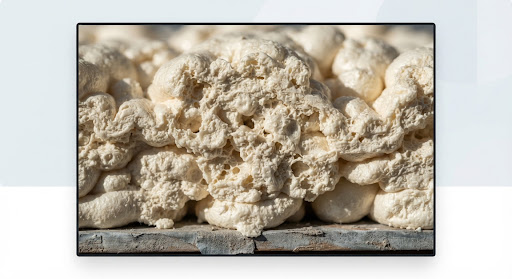
Spray foam roofs are exceptionally repairable — that's one of their core virtues — but they need a contractor who understands the system, and generalist roofers in the Madera area often don't. The foam itself rarely fails. What happens instead: the protective silicone or acrylic topcoat weathers thin past its 10–20-year cycle and UV starts eating the exposed foam; hail or dropped equipment gouges the surface; birds peck at exposed foam edges; or a poor original application left thin spots and pinholes. The repair logic follows the damage. Small punctures and gouges get cleaned, cut back to sound foam, filled with sealant or spot-applied foam, and recoated. Larger damaged areas get scarfed down, re-foamed, and re-coated to blend with the field. And a roof whose whole topcoat is at end of life doesn't need patch repairs — it needs its scheduled recoat, which at $2–$4 per square foot renews the entire surface. If another contractor has told you a foam roof "can't be fixed" or must be torn off, get a second opinion before you spend replacement money — our foam roof repair guide covers what's actually repairable, which is nearly everything.
Blisters are the foam-specific condition worth understanding. A blister forms where a pocket of gas or moisture was trapped during original application or developed under a damaged coating; most are cosmetic and stable, but ones that grow or break need attention before water reaches the foam below. The repair is routine for a foam-literate crew: cut the blister back to sound material, dry the cavity, refill with foam or sealant, and recoat. Bird activity gets the same treatment — exposed foam at an edge or a coating breach can attract pecking, and the fix is repair plus a proper coating layer that removes the temptation. The larger point: every one of these conditions is cheap when caught early and expensive when ignored for five years, which is why we push maintenance inspections on every foam roof we touch. A twice-a-year walk and a handful of touch-ups is what keeps a foam roof on its decades-long trajectory.
A roof leak means something different when it's over a barrel room, a bottling line, or a food-processing floor. Madera's wine and food operations — the AVA's wineries, the nut processors, the cold-chain warehouses off the 99 — can't tolerate water over product, and they can't always shut down while a roof gets opened up. We plan repair work around that reality: containment and interior protection before any cutting, sequencing by production zone, sanitation-conscious housekeeping on food sites, and scheduling around crush, harvest, and shipping windows. Condensation deserves special mention here, because in fog season it masquerades as a roof leak: warm humid interior air hits a cold uninsulated deck or metal panel and "rains" indoors with no breach anywhere. We diagnose which one you actually have before anyone sells you a repair — the fix for condensation is insulation and vapor control, not patching sound membrane.
For QA-driven operations we also document differently: dated drone imagery before and after, written scope of what was found and fixed, and materials information where your food-safety program needs it. A repair your auditor can see on paper is worth more than one that lives in a foreman's memory. And when harvest or crush timing means a full repair has to wait, we'll stabilize honestly — temporary measures identified as temporary, with the permanent scope and price already in writing for the moment your calendar opens.
Processing sites also mix roof types in ways that complicate leak-chasing: a metal-roofed production hall abutting a flat built-up section over offices, a membrane roof on the cooler addition, a foam roof someone installed on the warehouse twenty years ago. Water crossing those transitions — a metal roof draining onto a flat section, a wall flashing where two eras of construction meet — is one of the most common and most misdiagnosed leak paths we see in Madera's ag-industrial stock. Transition details are where systems built in different decades were never properly married, and repairing them takes fluency in both systems at once. It's exactly the kind of work a single-system roofer patches badly and a diagnostic-first contractor fixes once.
Madera County's metal buildings — shops, barns, hullers, equipment sheds from the west-side avenues to Chowchilla — leak in predictable places: fastener heads whose washers have weathered and backed out (multiplied by the thousands across one roof), panel laps opened by thermal cycling, rusted valleys and ridge details, and skylight panels gone brittle. Piecemeal fixes hold for a season; done right, repair means treating fastener fields systematically with brushed sealant or caps, reinforcing laps with coating and fabric, cutting out rust-through, and replacing failed light panels. When a metal roof's leaks are widespread rather than local, the honest math usually favors restoration — a full silicone coating system or spray foam over the panels — rather than an endless series of service calls. We'll show you that math with real numbers, not pressure; the comparison logic is the same one laid out in our spray foam vs TPO guide.
Don't overlook the non-panel leak sources on metal buildings, because they're a third of the calls: gutters rusted through or pulled loose at the eave, ridge and rake trim with failed closures, and aged fiberglass skylight panels that have gone brittle and cracked — a fall hazard as well as a leak, and one we treat with respect and proper fall protection when we work around them. A metal-roof repair scope that doesn't itemize edges, trim, and light panels isn't a complete scope.
The most valuable thing we bring to a Madera repair call is an honest read on which category your roof is in. Core samples and drone imagery take the guesswork out of it:
| Roof Condition | Right Answer | Typical Cost Range |
|---|---|---|
| Localized damage; assembly dry and sound | Targeted repair | Hundreds to low thousands, scope-dependent |
| Surface weathered; insulation dry; leaks starting at details | Repair details + full restoration coating | $2–$4/sq ft |
| Foam roof at end of topcoat cycle (10–20 yrs) | Scheduled silicone recoat | $2–$4/sq ft |
| Widespread saturation, failed adhesion, or structural issues | Replacement — often SPF over prepared deck | $4–$8/sq ft for new SPF |
Roughly a third of the "replacement" bids we're asked to check against turn out to be restoration or repair candidates. Cores don't lie, and we put what they show in writing.
The table also explains why a second opinion is cheap insurance on any large bid. Replacement is the right answer for some Madera roofs — but it's also the most profitable answer for a contractor to reach, and the difference between "needs replacement" and "needs $12,000 of repairs and a coating in three years" can be six figures on a big warehouse. Our assessment costs you nothing, produces core data you can hold any bidder to, and takes 48 hours to turn into written numbers. Even owners who ultimately hire someone else come out ahead knowing what's actually inside their roof.
Standing water is the background condition behind a huge share of Madera flat-roof failures, and patching a leak inside a pond without addressing the pond is a short-term transaction. Where drainage is the root cause we correct it as part of the repair: sculpted foam crickets that re-slope water toward drains, cleared and rebuilt drain bowls, added scuppers or drains where the original design was inadequate, and — on foam roofs — re-foamed low spots that restore positive slope. This is an area where SPF as a material gives us options flat-membrane contractors don't have: foam can be built up in place to any contour, so drainage corrections that would be major carpentry on other systems are spray work on ours. Details on how slope-building fits a full system are in our installation process overview.
Timing matters on ponding work: corrections want a dry roof, which means the smart schedule is summer and fall — before the storm season that will test them — not February, when the pond is already standing. If your roof grew ponds last winter, this is the call to make in the dry months. It's also the cheapest version of the work, because dry-season repairs don't carry the urgency premium or the complications of working around active leaks.
We'll be straight with you about response times rather than invent guarantees: our crews dispatch from our Tulare County shop, about sixty minutes south of Madera on CA-99, and we prioritize active-leak calls — water over product, occupied space, or equipment moves to the front of the schedule. When you call (559) 739-9519 with an active leak, tell us what's under the leak and what kind of roof you have; we'll tell you honestly when we can be there and walk you through immediate containment in the meantime: catch and divert water, move or cover what's below, and if it's safe and accessible, clear the nearest roof drain — a backed-up drain sheeting water over a flashing is one of the most common "sudden" leaks in Madera's winter storm-then-fog pattern. What we won't do is promise a 24/7 fleet we don't operate. We'd rather earn the second call by being honest on the first one.
The best emergency plan is the one made in October. Madera's leak calls cluster with the first real Pacific storms of the season, when every marginal seam and clogged drain announces itself in the same week — and every roofer's schedule fills in the same week too. A pre-season inspection catches the marginal details while they're cheap and the weather is dry, and it puts your building on our books as a known roof, which makes any mid-winter call faster to triage and faster to fix. For buildings with product under the deck — barrel storage, packed nuts, cased goods — that pre-season check is some of the least expensive insurance you can buy.
The Madera area's storm profile is Pacific fronts with gusty winds, occasional convective cells with small hail, and wind-borne debris — plus the odd surprise off the foothills toward Coarsegold and Oakhurst, where elevation adds snow-load stress and sharper freeze-thaw to low-slope roofs. After a storm, the damage we find most is at the details: lifted flashings and edge metal, membrane punctures from debris, cracked coating at hail impact points, and displaced equipment that's torn its curb flashing. If you're documenting damage for an insurance conversation, our drone survey produces dated, high-resolution imagery of the entire roof surface — useful evidence whether or not you end up filing. We repair what's actually damaged and tell you plainly when a roof's post-storm problems are really pre-storm age.
Foothill buildings add snow to the ledger. Oakhurst sits above 2,000 feet and catches real winter weather; low-slope roofs up there carry loads and freeze-thaw cycling their Valley-floor cousins never see, and melt water refreezing at drains and scuppers does a special kind of damage to marginal details. If you operate a lodge, restaurant, or commercial building on the CA-41 corridor, treat the first cold snap the way Valley owners should treat the first storm — as a deadline for getting known weak points repaired, not as the moment to discover them. We inspect and repair foothill roofs on the same free-assessment terms as everywhere else in the county.
Repair pricing depends on scope in a way per-square-foot numbers can't capture, so treat anyone quoting sight-unseen with suspicion. What we can tell you: assessment is free — drone survey, core samples where warranted, written findings and bid within 48 hours. Targeted repairs on an otherwise sound roof typically run in the hundreds to low thousands. Full restoration coating, when the roof qualifies, runs $2–$4 per square foot. Replacement with new spray foam runs $4–$8 per square foot. Where repairs will only buy a season or two, we say so and show you the numbers side by side — the spray foam roofing cost guide lays out the lifecycle comparison we use.
For owners and property managers who'd rather never make the emergency call at all, we run ongoing maintenance programs: scheduled inspections (typically spring and fall), drain and debris hygiene, small-repair touch-ups handled on the spot, and a photographic condition record that builds year over year. On foam and coated roofs this is doubly valuable because the maintenance directly extends the recoat cycle — a roof that gets its minor damage repaired promptly reaches the far end of its 10–20-year coating life, while a neglected one gets recoated early. The program pays for itself the first time it converts what would have been a January emergency over stored product into a September work order.
Property managers and multi-building owners get a version of this built for portfolios: one assessment pass across every roof you're responsible for, a condition ranking that separates the roof that needs money this year from the ones that need a drain cleaning and a note in the file, and repair scopes written so they can go straight into a budget cycle. Tenanted buildings get coordination handled — we work leak calls with your tenant's operation the same way we work them with owner-occupants, and the documentation trail keeps everyone's responsibilities clear. It's the difference between managing roofs and being ambushed by them. And because the condition record accumulates — the same roof photographed from the same drone passes year after year — slow-moving problems like a growing pond or a spreading blister field get caught on the trend line, not discovered at failure.
Our repair territory covers Madera proper — the Industrial Park, the Avenue 12 and Avenue 17 corridors, downtown and the 145 approaches — plus Chowchilla's ag and processing buildings to the north, and the foothill commercial stock up CA-41 through Coarsegold to Oakhurst. Foothill buildings get the same diagnostic-first approach with elevation factored in: snow-melt cycling, colder nights, and pine debris in drains change the failure patterns, and we've seen enough of both climates to know the difference. Family-owned for 20+ years, licensed (#C-2-1052735), BBB Accredited, SPFA member, and backed by industry-leading leak-proof guarantees on the systems we install. Call (559) 739-9519 — the survey is free, the bid takes 48 hours, and the diagnosis is honest either way.
Also serving Madera: Spray Foam Roofing in Madera · Silicone Roof Coating in Madera · Commercial Insulation in Madera. See all Madera services on the Madera service hub, or read our full foam roof repair guide. Nearby: Foam Roof Repair in Merced · Foam Roof Repair in Hanford.
That's common — generalist roofers often don't know SPF, and some wrongly tell owners foam can't be repaired. Foam roofs are actually among the most repairable systems: punctures get cut back and filled, damaged areas get re-foamed, and weathered topcoats get recoated. We've specialized in spray foam systems for over 20 years and repair them routinely across Madera County.
On flat roofs, water travels — it enters at a seam, fastener, or flashing and runs along the deck before dripping inside, often dozens of feet from the breach. In fog season it may not even be a leak: condensation on a cold, uninsulated deck mimics one. Our drone survey and physical inspection trace the real source before anything gets patched.
We prioritize active-leak calls — water over product or occupied space moves to the front of our schedule — and we're honest about timing: crews dispatch from our Tulare County shop, about an hour south of Madera. Call (559) 739-9519, tell us what's leaking and what's under it, and we'll give you a real arrival window plus immediate containment steps.
Core samples answer that question honestly. If the insulation is dry and damage is localized, repair is the right money. If the surface is aged but the assembly is dry, restoration coating at $2–$4 per square foot beats replacement. Only widespread saturation or structural problems justify replacement cost. We put the findings and both prices in writing within 48 hours.
Yes — and it should be, because ponding accelerates every other failure. We build foam crickets to re-slope water toward drains, rebuild clogged or undersized drain assemblies, and on foam roofs re-foam low spots to restore positive slope. Fixing the drainage as part of the repair is what makes the repair last.
We do. The CA-41 foothill corridor is part of our regular Madera County territory. Foothill roofs fail differently — freeze-thaw cycling, snow-melt, pine debris in drains — and we factor elevation into both diagnosis and repair. Drive time from our shop is a bit over an hour, and the free assessment works the same: drone survey, cores if needed, written bid in 48 hours.
Free assessment — drone survey, core sampling where needed, and a written bid within 48 hours, anywhere in Madera County.
Or Call Directly
(559) 739-9519