Flat, foam, and metal roof repair from a Tulare County crew that's under 20 minutes away — leaks found with drone and core diagnostics, fixed right the first time.
Roof repair in Tulare is a different trade than it is in a shingle suburb. The roofs that leak here are overwhelmingly flat and low-slope — processing plants, warehouses, metal ag buildings, downtown commercial blocks — and on a flat roof, water almost never comes through where it shows up inside. It travels: under the membrane, along the deck flutes, down a purlin, and drips twenty or forty feet from the actual breach. Repairing these roofs well takes flat-roof diagnostics and flat-roof materials, and that's precisely what we do. Allstate Spray Foam Roofing repairs foam, flat, and metal roofing systems across Tulare County — family-owned, 20+ years in the trade, CA License #C-2-1052735, BBB accredited, SPFA member.
Geography is half the service. Our crews dispatch from our Tulare County shop, under 20 minutes from any roof in Tulare — the industrial parks off Highway 99, the buildings around the International Agri-Center, the dairy and processing corridor, downtown's older masonry blocks. We won't invent a guaranteed response time for marketing copy, but we'll tell you the plain truth: when a plant manager calls with water coming through over equipment, a crew that's twenty minutes out gets there and gets it stopped faster than one dispatching from Fresno or Bakersfield. That's the arithmetic of hiring local.
This page walks through what fails on Tulare's roofs, how we diagnose and repair each system, what ponding and winter fog do to a wounded roof, and how we help you decide — with real data — whether the answer is a repair, a restoration coating, or something more.
After two decades on Central Valley roofs, the failure catalog is familiar. Summer heat is the great accelerant: roof surfaces cycling past 150°F dry out asphalt, embrittle single-ply membranes, and expand-contract every seam and fastener daily for four months straight. Then winter arrives with concentrated rain and tule fog that keeps everything wet for weeks, and every flaw the summer opened becomes a leak.
None of these are exotic. What separates a lasting repair from a callback is finding the true entry point rather than caulking the symptom, matching the repair material to the roof system rather than smearing universal mastic on everything, and fixing the condition that caused the failure — not just the hole it made.
Every repair engagement starts with finding the actual problem, and we bring more diagnostic capability than a flashlight and a ladder. The free assessment includes a drone survey of the entire roof plane — high-resolution imagery that reveals ponding rings, membrane distress, displaced flashings, and rust fields without a single boot on a fragile surface. Where the roof's history is murky, we core sample: a small plug through the assembly tells us whether insulation is wet, how many roofs are stacked below, and whether the deck is sound. You get a written bid within 48 hours, scoped to what the evidence shows.
That discipline matters because flat-roof leaks lie. The stain over the office is routinely fed by a parapet crack forty feet away; the drip in the warehouse aisle traces to a rusted fastener three purlin bays upslope. Chasing stains with sealant is how buildings end up with a roof crusted in patch layers and still leaking. Finding the true path once is cheaper than patching the wrong spot three times.
The diagnostic step also protects you from over-scoping — the industry habit of turning every service call into a replacement pitch. A surprising share of the "you need a new roof" verdicts we're called to second-opinion turn out to be a failed pipe boot, a clogged scupper, or thirty feet of tired seam. When the drone imagery and cores say the roof has life left, a targeted repair or a restoration coating saves the owner enormous money, and we say so in writing.
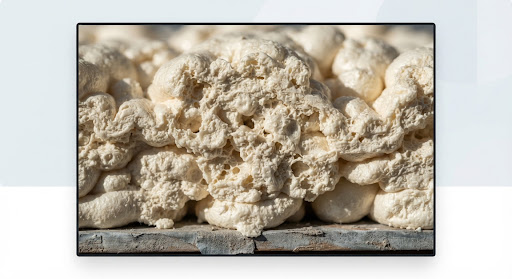
Foam roof repair is our home turf — we install SPF, so we repair it the way the system is engineered to be repaired. Spray foam roofs are famously repairable: damage stays localized because the closed-cell foam won't let water travel laterally, so a puncture or gouge is a contained wound, not a system failure. The correct fix is to cut out the damaged foam to sound material, dry the area, fill with new foam or compatible sealant, and re-coat with silicone to match the surrounding millage. Done right, the repair is as seamless as the original roof.
Done wrong — and we see this on roofs other contractors have visited — asphalt mastic gets smeared onto silicone-coated foam, where it doesn't bond, cooks in the sun, and falls off by spring, sometimes taking coating with it. Incompatible materials are the leading cause of failed foam repairs, which is why foam roofs deserve a contractor who actually knows the system. If you've been told your foam roof "can't be fixed," get the second opinion; that diagnosis is nearly always wrong. Our foam roof repair guide covers the methods, materials, and failure modes in detail.
The other foam-specific service is preventive: coating renewal. An SPF roof's silicone surface is designed to be recoated every 10 to 20 years at $2–$4 per square foot, and a roof approaching that window often shows up as "scattered small leaks" that are really just coating wear-through at high-traffic and high-exposure spots. Repairing those spots and scheduling the recoat resets the whole system — the economics are laid out in our foam roof lifespan guide.
Flat roof repair across Tulare's older commercial stock means working on whatever decades of ownership have layered up there: built-up roofing with gravel or cap sheet downtown, modified bitumen on the mid-vintage industrial buildings, TPO and EPDM on newer boxes. Each has its own correct repair practice — torch or cold-process patches on mod-bit, primed and welded patches on TPO, seam-and-flashing work on EPDM — and our crews carry the materials for all of them.
What we bring beyond patch competence is the option set no membrane-only shop has. Because we install foam and silicone, a repair visit can escalate sensibly instead of binarily. Localized damage gets a patch. A roof that's sound but aging out at the surface gets a silicone restoration at $2–$4 per square foot instead of a replacement. A roof with chronic ponding or insulation problems gets targeted foam work to rebuild slope. The repair-or-more decision gets made from drone imagery and core data, and we'll show you the evidence behind whichever we recommend.
Owners of older downtown buildings — the masonry blocks along Tulare's Inyo and Kern Avenue corridors — should note one pattern we find constantly: multiple roof generations stacked over an original deck, with leaks running between layers. These roofs especially reward the core-sample step, because what's visible on top tells you almost nothing about where the water travels underneath. A repair scoped blind on a layered roof is a coin flip; scoped with cores, it holds.
Metal roofs may be Tulare County's most common — and most patched — roofing system. Shops, commodity barns, dealership service buildings, and Highway 99 warehouses all run steel, and they all leak the same way: backed-out fasteners with failed washers, opened end-laps, rusted panels where dust and condensation sit, cracked pipe flashings, and ridge details that summer thermal cycling has worked loose. The tube-of-sealant treadmill is real; a smeared fastener holds for a winter or two and lets go.
Our metal repair work runs from the surgical to the systemic. Surgical: replacing failed fasteners with oversized gasketed screws, resealing laps with butyl and reinforced silicone detailing, treating rust, replacing individual ruined panels, rebuilding pipe and curb flashings. Systemic: when the fastener field is failing wholesale, spot repair stops making sense, and the honest recommendation becomes a full silicone restoration — every fastener encapsulated, every seam reinforced, the entire panel field sealed into one membrane — or foam-over-metal where the building also needs insulation and condensation control.
That last condition deserves a Tulare-specific note. A "leaking" metal roof in December or January is sometimes not leaking at all — it's condensing. Fog-season humidity inside a poorly insulated steel building condenses on the cold roof skin and drips, mimicking a leak convincingly. The fix for that is thermal (foam insulation on the panel underside or over the top), not another tube of caulk on the ridge. Diagnosing which water problem you actually have is exactly what an assessment is for, and getting it wrong wastes everyone's money.
Ponding is the flat-roof condition Tulare's winter turns malignant. Rain concentrates from November through March; fog keeps evaporation near zero between storms; and every birdbath on the roof becomes a semi-permanent pond that tests the surface below it for weeks at a stretch. Membranes and asphalt products degrade measurably faster under standing water, and a pond that gains an inch each year is quietly loading the structure too.
Patching a leak at the bottom of a pond without addressing the pond is a short-term transaction — the next tenant of that low spot will find the next pinhole. Our repair scope treats drainage as part of the fix: clearing and rebuilding drains and scuppers choked with the Valley's dust and debris, correcting details that dam water, and — the option unique to foam contractors — spraying SPF to fill and slope the low areas themselves so the water leaves. Foam slope-building converts chronic ponds into draining planes for a fraction of what tapered-insulation rework costs, and it's finished with silicone, the one coating chemistry rated for whatever standing water remains.
If your roof wears the concentric dirt rings of ponding history, deal with it in the dry season. Every one of those rings is a future leak with a date on it, and repair access is easier, faster, and cheaper in September than in the middle of a January storm sequence.
Active-leak calls get priority dispatch, and being under 20 minutes from Tulare means priority actually means something. What we do on an emergency call is honest triage: stop the water with properly matched temporary measures — reinforced patching, emergency sealant appropriate to the membrane, tarping where the damage outruns same-day repair — protect what's below, and document everything for your records and any insurance conversation. Then, once the roof is dry enough to diagnose properly, we scope the permanent repair with the same drone-and-core rigor as any assessment and hand you the written bid within 48 hours.
What we won't do is sell you a permanent fix installed onto a soaked substrate in the rain — repairs bonded to wet roofs fail, full stop, and any contractor promising otherwise is selling callbacks. Temporary now, permanent when conditions allow: that sequencing is what protects the building and the budget.
Two pieces of practical advice for Tulare facility and plant managers. First, when water appears, control the interior (move or cover what's under the drip, catch the water, note the time and location — photos help the diagnosis) and call rather than sending anyone onto a wet roof; slick membranes and hidden soft spots injure people every winter. Second, put your roof on a pre-winter inspection rhythm. The majority of the emergency calls we run between November and February trace to conditions that were visible — and cheaply repairable — in October.
Some Tulare buildings can't treat a leak as an inconvenience — it's a compliance event. Water intrusion over a milk receiving bay, a cheese line, or a packaging area lands in the facility's audit narrative, and the repair has to be handled with the same discipline as everything else in the plant. We run these calls regularly: containment and debris control around production and sanitation areas, materials staged clear of intakes and product paths, work windows coordinated with plant supervision, and photographic documentation of both damage and repair for the audit file. A leak over live food production is a fundamentally different job than a leak over a parts warehouse, and our crews treat it that way without being asked.
The rooftop environment on these facilities also shapes the repair itself. Processing roofs carry dense penetration fields — refrigeration lines, exhaust stacks, CIP venting — and the chemical-and-steam microclimate around those penetrations ages flashings and fasteners faster than the open field of the roof. When we repair a processor's roof, we inspect the whole penetration field while we're up there, because the flashing that failed this month has siblings on the same schedule. Owners get that condition report with the repair invoice, so next year's budget can see next year's problem coming.
Buildings around the International Agri-Center run on a different clock: the World Ag Expo every February. Exhibitors, vendors, and the facilities that serve the show want zero roof questions during their most important week, so late fall is when those inspections and repairs belong on the calendar. We hold capacity for pre-Expo work every year because the calls always come — the smart ones just come in October instead of the week the gates open.
The repair economics of flat roofs are lopsided: the same failure costs an order of magnitude more after a winter of water travel than it does the October before. A cracked pipe boot found in a fall inspection is a service-call fix. The same boot found in February — after three storms have pushed water along the deck, soaked a run of insulation, and stained two thousand feet of ceiling — is a remediation project. Every flat-roofed building in Tulare should be on a simple annual rhythm, and ours is deliberately inexpensive: a drone pass and walkover before the rains, drains and scuppers cleared of the year's ag dust and debris, flashings and previous repairs checked, and a short photo report that says either "you're fine" or "fix these three things now."
That rhythm matters doubly here because of how the Valley's seasons stack. Summer does the damage — four months of 150-degree surface temperatures and daily thermal cycling opening seams and cooking sealants — and winter finds it, all at once, in the first serious storm sequence of November. The inspection window between those two seasons is short and valuable. Buildings that use it almost never call us in an emergency; buildings that don't are where most of our January dispatches come from.
For owners with multiple buildings — a common situation among Tulare's dairy operators and industrial landlords — we set up the whole portfolio on one fall sweep, prioritized by roof age and condition, so the repair budget gets spent where the evidence says it should. It's unglamorous work, and it's the highest-return money in commercial roofing.
Not every failing roof needs the same answer, and the wrong-sized answer wastes money in both directions. Here's the framework we actually use, and the numbers that go with it:
| Roof Condition | Right Answer | Typical Cost |
|---|---|---|
| Localized damage — seams, flashings, punctures, isolated fastener failures; assembly dry | Targeted repair | Scoped per job after free assessment |
| Widespread surface aging, minor leaks, roof sound and dry underneath | Silicone restoration coating | $2–$4 / sq ft |
| Chronic ponding, insulation deficit, or surface beyond coating — deck sound | SPF re-cover (foam + silicone) | $4–$8 / sq ft |
| Widespread saturated insulation or structural deck failure | Replacement of affected assembly | Scoped per job — the last resort, not the default |
The evidence decides, not the sales quota: drone imagery, core samples, and moisture readings, shared with you. It's your roof and your capital plan — our job is to size the intervention to the actual condition and put the reasoning in writing. When repair genuinely is the answer, we're happy to do the small job well; small jobs done well are where twenty years of local reputation come from. The cost mechanics of each path are broken down further in our roofing cost guide.
Our repair radius covers the whole southern county from the Tulare County yard. In Tulare proper, that's everything from Agri-Center-area buildings to Highway 99 industrial parks to the dairy processing corridor — and around the February World Ag Expo, we keep capacity for the pre-show leak calls that always come when facilities button up for their busiest week. Down the 99, Tipton and Pixley's dairy-belt metal buildings keep our fastener-and-flashing crews busy. East on 137, Lindsay's packinghouses and cold-storage roofs carry exactly the ponding and penetration-density problems this page describes. Porterville, on Highway 190, adds flat-roofed retail, industrial, and civic stock.
Wherever the building is, the process is the same: call (559) 739-9519, tell us what the roof is doing, and we'll get eyes on it — drone survey, core samples where warranted, written bid within 48 hours, free. Repairs come backed by our industry-leading leak-proof guarantees and by something rarer: a local crew that will still be twenty minutes away when the roof needs attention again years from now.
Also serving Tulare: Spray Foam Roofing in Tulare · Silicone Roof Coating in Tulare · Commercial Insulation in Tulare. See all Tulare services on the Tulare service hub, or read our full foam roof repair guide. Nearby: Foam Roof Repair in Hanford · Foam Roof Repair in Visalia.
Our crews dispatch from our Tulare County shop, under 20 minutes from Tulare, and active leaks get priority. We won't quote a guaranteed response time as a gimmick, but being genuinely local means emergency calls are typically same-day: stop the water with appropriate temporary measures, then scope the permanent repair once the roof is dry.
Completely normal on flat roofs. Water enters at a seam, flashing, or fastener, then travels along the deck before dripping, often dozens of feet from the breach. That's why we diagnose with a drone survey and core samples instead of just patching above the stain — fixing the true entry point is what stops the callbacks.
Foam roofs are among the most repairable systems ever made. Damage stays localized because closed-cell foam blocks lateral water travel, so the fix is cutting out the damaged area, refilling, and recoating with silicone. If someone told you a foam roof can't be fixed, get a second opinion — the usual real problem is contractors using incompatible asphalt products on it.
Very possibly condensation. During tule fog, humid interior air condenses on cold, under-insulated steel panels and drips convincingly like a leak. The fix is thermal — insulation and air-sealing, often spray foam — not more caulk. Our assessment determines which water problem you actually have before you pay to fix the wrong one.
Yes, regularly — it's core work in Tulare. We coordinate with plant schedules, control debris and materials strictly around production and sanitation areas, and document the work for your audit files. Most repairs proceed without any interruption to operations below.
Let the evidence decide. Our free assessment — drone survey, core sampling, moisture checks — shows whether damage is localized (repair), surface-wide but dry underneath (silicone restoration at $2–$4/sq ft), or deeper (foam re-cover at $4–$8/sq ft). Full replacement is the last resort, and far rarer than replacement-first bids suggest. You get the findings and a written bid within 48 hours.
Free assessment — drone survey, core sampling where needed, and a written bid within 48 hours, anywhere in Tulare County.
Or Call Directly
(559) 739-9519